Manga
The manga that were hits in Japan in the 1990s.
1990S HITS
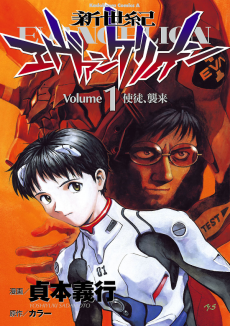
About
In 2015, the "Angels" have returned, and Shinji Ikari, a fourteen year-old child of the new Earth, is forced by his father Gendo--commander of the secret organization NERV--to pilot the monstrous biomechanical weapon called "Evangelion" to match the Angels' fearsome power...
Character analysis

Shinji is called back by the father who abandoned him specifically to pilot a biomechanical weapon against world-ending threats, and his anxious, self-doubting reluctance to fight is treated as completely reasonable rather than a flaw to be trained out of him. The story is less interested in whether he can win battles and more in whether he can survive the psychological weight of being asked to.

Rei's near-total emotional flatness and obedience initially read as simple reserve, but the story gradually reveals there's far more behind her quietness than a shy personality, tied directly into the larger mysteries of the series. Her relationship with Shinji, built on small, careful gestures rather than big declarations, is one of the show's more understated threads.

Asuka arrives with genuine piloting skill and an abrasive, competitive need to be the best, and the story spends real time unpacking exactly why her self-worth is so tightly wound up in performing well in combat. Watching that confidence crack under pressure is one of the series' most unflinching character studies.

Misato oversees the teenage pilots both as their military commander and, unofficially, as a kind of guardian, and her casual, beer-loving home life contrasts with the carefully controlled version of herself she presents at work. Her own unresolved history with the disaster that shaped this world gives her more in common with the kids she's protecting than either side initially realizes.

Gendo commands the organization behind the Evangelion project with cold, unreadable precision, and his willingness to use his own son as a means to an end defines Shinji's entire emotional struggle throughout the story. He's given just enough context to make his coldness explicable without ever excusing it.
Status evaluation
Striking mecha and creature designs combine with unusually expressive, psychologically focused character art.
The series is widely regarded as a landmark deconstruction of the mecha genre, using giant robot battles to examine trauma and isolation.
This is an intensely psychological, often bleak story with very little comic relief.
Trauma, isolation, and the pilots' fractured self-worth are handled with unusually direct, sustained emotional weight.
Angel designs and the story's psychological intensity create real, sustained unease.
Battles and body horror moments are shown fairly directly at points.
Dense mythology and psychological layering ask for real attention and patience to follow.
This is a completed series. This figure has not been verified against a current source and should be treated as approximate.
“A kid who clearly does not want to be here, piloting a giant robot purely because his absent father asked, is a far sadder hook than most mecha stories ever attempt.”