Manga
The manga that were hits in Japan in the 1990s.
1990S HITS
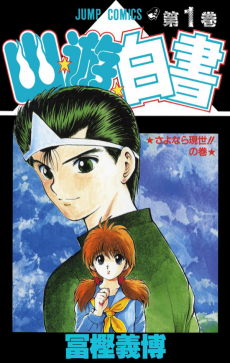
About
Yusuke Urameshi was a tough teen delinquent until one selfless act changed his life...by ending it. When he died saving a little kid from a speeding car, the afterlife didn't know what to do with him, so it gave him a second chance at life. Now, Yusuke is a ghost with a mission, performing good deeds at the behest of Botan, the ferrywoman of the River Styx, and Koenma, the pacifier-sucking judge of the dead.
Character analysis

Yusuke's death, pushing a child out of the way of a car, is such an out-of-character selfless act that the afterlife itself doesn't know what to do with him, and his reluctant second chance as a spirit detective keeps that same gruff, don't-call-me-a-hero attitude intact even as he keeps doing genuinely heroic things.

Kuwabara starts as Yusuke's schoolyard rival and becomes one of his most loyal allies, and his psychic sword ability is less naturally refined than raw willpower made visible. His exaggerated bravado and genuine soft spots, especially his crush on Yukina, keep him from ever being just comic relief.

Kurama is actually an ancient, feared demon who took refuge in a human baby's body to escape death, and his calm, calculating intelligence contrasts sharply with Yusuke and Kuwabara's more brute-force approach to fighting. His protectiveness toward his human mother is treated as genuine, not just a cover identity.

Hiei starts the story as an open enemy of Yusuke's team, and his slow, grudging shift toward something like loyalty never fully erases his cold, dismissive attitude toward most people. His hidden connection to a gentle ice demon named Yukina gives his harsh exterior a real, carefully guarded soft spot.

Botan guides souls to the afterlife in her usual job, which makes her an odd but fitting choice to manage Yusuke's new life as a spirit detective. Her upbeat, chatty energy is a consistent contrast to the darker supernatural cases Yusuke gets pulled into.
Status evaluation
Expressive character art and inventive demon designs give the series a strong, distinct visual identity.
The spirit-detective premise expands steadily from street-level cases to large-scale demon tournaments without losing its footing.
Kuwabara's bravado and the team's banter keep the tone light even as the stakes escalate.
Character backstories, especially around found-family bonds, add real weight beneath the action.
Demon designs can be unsettling, but the tone stays adventurous rather than frightening.
Fights involve real injury and violence, shown fairly directly without being the main focus.
A large cast of demons and spirit-world rules add some tracking without becoming hard to follow.
This is a completed series. This figure has not been verified against a current source and should be treated as approximate.
“Dying to save a kid and getting recruited as a ghost detective is such a strange reward that the story spends its whole run making it feel earned.”