Manga
The manga that were hits in Japan in the 1990s.
1990S HITS

About
At seventeen years of age, Miyamoto Musashi--still known by his childhood name, Shinmen Takezo--was a wild young brute just setting out along the way of the sword. In the aftermath of the epic Battle of Sekigahara, Takezo finds himself a fugitive survivor on the losing side of the war. Takezo's vicious nature has made him an outcast even in his own village, and he is hunted down like an animal. At this crucial crossroads in Takezo's life, an eccentric monk and a childhood friend are the only ones who can help him find his way.
Character analysis
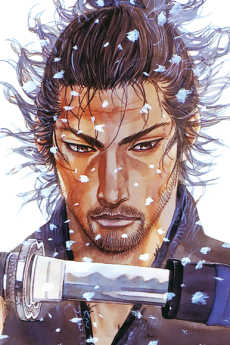
Musashi survives a devastating loss at the Battle of Sekigahara and spends the following years as a feared, half-feral fighter, hunted by his own village for his savagery. His long, difficult path toward actual swordsmanship, not just raw violence, is the story's real subject, strength that means something only comes after he starts caring what it's for.

Matahachi abandons Musashi after their shared battlefield defeat and later builds a new identity around false claims of heroism, and his ongoing cowardice and self-deception give the story a clear, uncomfortable contrast to Musashi's difficult but honest path.

Otsu was originally engaged to Matahachi, but her feelings shift toward the far more dangerous and unpredictable Musashi, and her patient, often painful devotion to him gives the story one of its few steady emotional threads outside of swordsmanship.

Kojiro's path to mastery is defined by his own private, obsessive training, separate from Musashi's experience but running on a parallel, equally demanding track. His eventual rivalry with Musashi is built on mutual respect for shared obsession, not simple hatred.

Takuan is one of the only people willing to look past Musashi's feral reputation, and his guidance, often delivered through riddles and hard lessons rather than direct instruction, pushes Musashi toward a more thoughtful, deliberate understanding of strength.
Status evaluation
Painterly, highly detailed brushwork makes this one of the most visually acclaimed manga ever produced.
Musashi's journey from feral violence to genuine swordsmanship is widely considered one of the medium's great character studies.
This is a serious, introspective historical drama with very little comic relief.
Musashi's isolation and slow growth toward connection give the story real, sustained emotional depth.
Musashi's early feral violence carries real unease, though the tone stays reflective drama rather than horror.
Sword violence is depicted in direct, often brutal detail, consistent with its historical setting.
The historical backdrop and a large cast of swordsmen and rivals ask for some attention to follow.
This figure has not been verified against a current source and should be treated as approximate.
“A feral, hunted young fighter slowly learning that strength without purpose is just violence. This is one of the most patient, rewarding reads on this whole list.”