Tsukemono
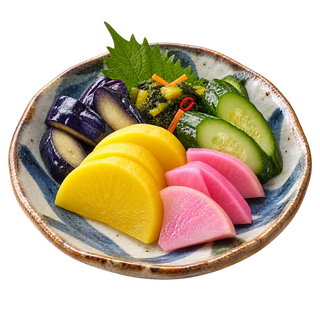
Tsukemono are vegetables preserved in salt, rice bran, miso, soy, vinegar, or sake lees — cucumber, daikon, aubergine, Chinese cabbage, plum. They appear as a small dish at almost every traditional meal, meant to reset the palate and add crunch and salt against plain rice. Kyoto's refined versions (senmaizuke, shibazuke) are a regional speciality and common souvenirs. Bright yellow takuan and neon-pink shibazuke get their colour partly from dye.
FERMENTED FOODS
ABOUT
Tsukemono are vegetables preserved in salt, rice bran, miso, soy, vinegar, or sake lees — cucumber, daikon, aubergine, Chinese cabbage, plum. They appear as a small dish at almost every traditional meal, meant to reset the palate and add crunch and salt against plain rice. Kyoto's refined versions (senmaizuke, shibazuke) are a regional speciality and common souvenirs. Bright yellow takuan and neon-pink shibazuke get their colour partly from dye.
DIETARY NOTES
General guidance for the standard version of this dish. Recipes vary by shop and region — always confirm with the restaurant if you have an allergy or a religious dietary requirement.
DETAILS