Dango
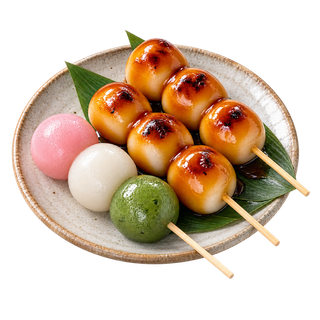
Dango are chewy dumplings of rice flour, usually three to five on a skewer. Common types: mitarashi, glazed in a sweet-salty soy syrup; anko, coated in red bean paste; and hanami dango, the pink-white-green trio eaten under cherry blossom. They are lightly sweet at most and quite dense — closer to plain mochi than to Western dessert. Not to be confused with mochi, which is pounded rather than shaped from flour.
Some links on this page are paid links. If you book or buy through them, J-Pedia may earn a commission at no extra cost to you. As an Amazon Associate I earn from qualifying purchases. How we make money
← Back to FoodSWEETS
ABOUT
Dango are chewy dumplings of rice flour, usually three to five on a skewer. Common types: mitarashi, glazed in a sweet-salty soy syrup; anko, coated in red bean paste; and hanami dango, the pink-white-green trio eaten under cherry blossom. They are lightly sweet at most and quite dense — closer to plain mochi than to Western dessert. Not to be confused with mochi, which is pounded rather than shaped from flour.
DIETARY NOTES
General guidance for the standard version of this dish. Recipes vary by shop and region — always confirm with the restaurant if you have an allergy or a religious dietary requirement.
WHERE TO EAT
COOKING CLASSES & EXPERIENCES
Hands-on classes and food tours featuring Dango, booked through GetYourGuide (free cancellation up to 24h before on most).
CAN’T GET IT WHERE YOU ARE?
Fresh wagashi like Dango are hard to find outside Japan. Bokksu ships a curated box of Japanese snacks and sweets — often including mochi, dorayaki and dango — to your door every month, with tasting notes on what’s inside.
See Bokksu’s Japanese snack box ↗DETAILS