Manga
The manga that were hits in Japan in the 2000s.
2000S HITS
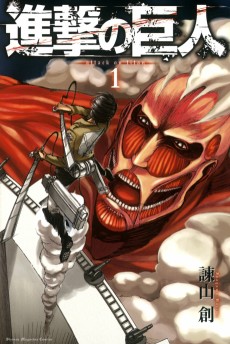
About
In this post-apocalyptic sci-fi story, humanity has been devastated by the bizarre, giant humanoids known as the Titans. Little is known about where they came from or why they are bent on consuming mankind. Seemingly unintelligent, they have roamed the world for years, killing everyone they see. For the past century, what's left of man has hidden in a giant, three-walled city. People believe their 50-meter-high walls will protect them from the Titans, but the sudden appearance of an immense Titan is about to change everything.
Character analysis
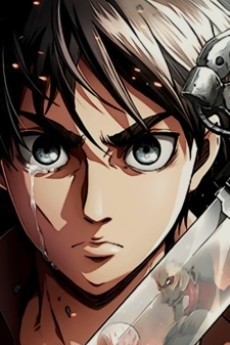
Eren wants revenge, and by the end, he gets it. But the story doesn't treat that as a win — it treats it as a warning. Most hero stories turn anger into something good, or point it at a clear bad guy. This one does the opposite: Eren's hatred ends up looking a lot like the hatred of the people he was fighting. The story builds this slowly. As the series goes on, Eren gets calmer and colder, and he starts treating the people close to him as tools for his plan. By the final arc, it's clear this was the plan all along — not a sudden twist. The story never fully says whether Eren is a hero, a villain, or both. That feels like the point. It's less interested in judging him and more interested in showing how someone the reader liked could end up here.
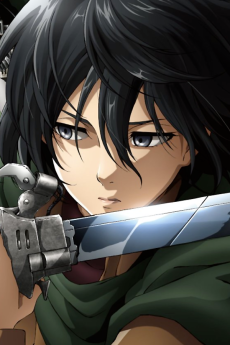
Mikasa is loyal to Eren almost to a fault, and the story explains why early on: he saved her life as a child, and she's never forgotten it. At first, this looks like a simple trait — the strong, devoted friend. But over time, the story asks a harder question: is this loyalty really who she is, or is it a wound that never healed? She's one of the strongest fighters in the series, but that strength is tied to loss, not confidence. Her bond with Eren is the emotional center of a story that's mostly about war and politics — without her, his choices would just be strategy on a map. Her story doesn't give easy answers, but by the end, she may be the character closest to breaking free of the hatred that traps everyone else.
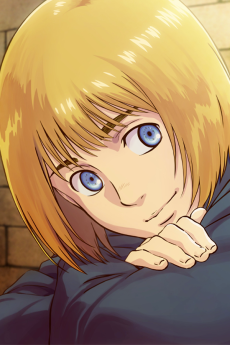
Armin starts the story as the weak one — the kid who can't fight and needs protecting. By the end, he's the one making life-or-death calls that affect thousands of people. That change happens slowly, not all at once. Armin isn't a fighter; he's a thinker, and the story leans on him to carry its hardest decisions. His journey also mirrors the story itself: it starts out like a monster survival story and turns into something much bigger and sadder, and Armin's arc follows that same shift. By the end, the 'kind' character has made choices just as heavy as anyone else's — the story doesn't let him stay innocent.
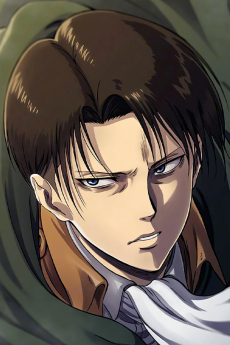
Levi is introduced as the strongest soldier in the story — and the story spends the rest of its run proving that strength alone isn't enough. He can win almost any fight, but he still watches people under his command die in situations his skill can't fix. That's different from a lot of action stories, where the strongest character usually keeps everyone around them safe. His relationship with Commander Erwin is where this hits hardest — Levi has to choose between loyalty to someone he respects and the cold logic of the mission. Being the best soldier doesn't protect him from loss. If anything, it means he's sent into the worst situations, and sees the most death up close.

Reiner is revealed fairly early as an enemy spy — but the story isn't really interested in the twist itself. It's interested in what comes after. For a long stretch, the story puts readers inside Reiner's head: his guilt, his trauma, and the fact that his own country has reasons to see itself as the good guys too. Most stories would have the 'bad guy' defeated and move on. This one makes Reiner live with what he did, including real suicidal thoughts that the story treats seriously, not as a quick dramatic beat. Reiner is almost a mirror of Eren: Eren shows how someone becomes capable of terrible things, and Reiner shows what it's like to carry that afterward. The story doesn't pick a side to root for — it asks you to understand both.
Status evaluation
The art changes a lot over the series. It starts out rough, but later volumes are packed with detail and huge action scenes. The 3D maneuver gear fights are especially good: you can always tell who is where and what is happening.
Small details from the early chapters, like a locked basement or a father's strange behavior, turn out to be important dozens of volumes later. The story feels planned from the start, and the foreshadowing really pays off.
The cadets joke around in the early volumes, but the story gets very dark as it grows. After the early arcs, there's very little to laugh at.
Characters die often and suddenly, and almost never come back. You never know who will survive, and that keeps you on edge. The ending leaves some losses unresolved, so it stays with you.
The early chapters are scary in a physical way, with the Titans and the fear of being caught. Later, the fear becomes more psychological. In both halves, nobody is guaranteed to survive. It's tense throughout, though not quite a full horror series.
Titan attacks are shown in graphic detail from early on, and this keeps happening throughout the series, not just once or twice.
The story has several timelines, political groups on more than one side, and secrets that are only explained much later. If you skip the early volumes, the later ones are hard to follow.
34 volumes (139 chapters), finished in 2021. That's a big commitment, though much shorter than the longest-running manga. This figure has not been verified against a current source and should be treated as approximate.
“A story that wraps up beautifully. Every long-running hint pays off, and not knowing who might die next keeps you hooked.”