Nabe
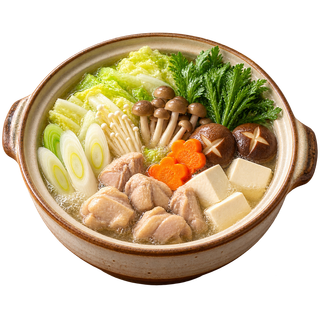
Nabe is the umbrella term for Japanese hot pot: a clay pot of broth kept simmering on a tabletop burner while everyone cooks and eats together. It is winter's social meal. Named versions differ by broth and star ingredient — kimchi nabe, chanko (the sumo stew), mizutaki (plain chicken), motsunabe (offal). At the end the flavour-rich broth is turned into rice porridge or noodles, a step called shime that is half the point.
HOT POT
ABOUT
Nabe is the umbrella term for Japanese hot pot: a clay pot of broth kept simmering on a tabletop burner while everyone cooks and eats together. It is winter's social meal. Named versions differ by broth and star ingredient — kimchi nabe, chanko (the sumo stew), mizutaki (plain chicken), motsunabe (offal). At the end the flavour-rich broth is turned into rice porridge or noodles, a step called shime that is half the point.
DIETARY NOTES
General guidance for the standard version of this dish. Recipes vary by shop and region — always confirm with the restaurant if you have an allergy or a religious dietary requirement.
WHERE TO EAT
DETAILS