Miso Soup
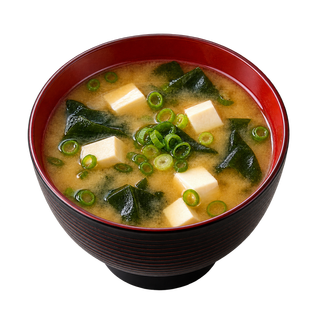
Miso soup is dashi stock with miso paste stirred in, usually holding a little tofu, wakame seaweed, or seasonal vegetables. It appears at almost every meal, breakfast included, and is treated as a constant rather than a course. Colour and saltiness depend on the miso — pale, sweeter white miso in Kyoto; dark, deep red miso around Nagoya. It is not vegetarian by default, because the dashi is usually made with bonito or dried sardine.
SOUP
ABOUT
Miso soup is dashi stock with miso paste stirred in, usually holding a little tofu, wakame seaweed, or seasonal vegetables. It appears at almost every meal, breakfast included, and is treated as a constant rather than a course. Colour and saltiness depend on the miso — pale, sweeter white miso in Kyoto; dark, deep red miso around Nagoya. It is not vegetarian by default, because the dashi is usually made with bonito or dried sardine.
DIETARY NOTES
General guidance for the standard version of this dish. Recipes vary by shop and region — always confirm with the restaurant if you have an allergy or a religious dietary requirement.
DETAILS