Manga
Picked by our editor, Nico.
NICO'S PICKS
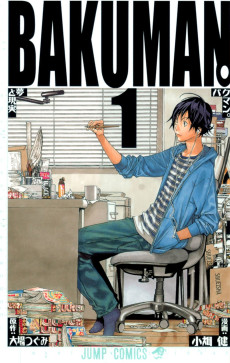
About
Average student Moritaka Mashiro enjoys drawing for fun. When his classmate and aspiring writer Akito Takagi discovers his talent, he begs Moritaka to team up with him as a manga-creating duo. But what exactly does it take to make it in the manga-publishing world?
Character analysis

At the start, Mashiro is a 14-year-old who does not know what to do with his life, even though he draws very well. His uncle was a manga artist who died from overwork, so he knows how hard the job can be. When his classmate Takagi asks him to team up, he says no at first, then changes his mind. His story shows that talent is only the start, and that the real work is in keeping going.

Takagi gets some of the best grades in the country and could easily choose a stable future. Instead, he dreams of writing manga, and he is the one who brings Mashiro into this world. Together they work under the shared pen name "Ashirogi Muto," with Takagi writing and Mashiro drawing. Their partnership, with all its arguments and trust, is the heart of the series.

Azuki wants to become a voice actor. She and Mashiro promise to marry once both of their dreams come true, and she asks that they not see each other until then. That old-fashioned, romantic promise gives Mashiro a clear reason to work hard. She also shows that the story is not only about manga, but about two young people each chasing their own goal.

Niizuma is a high school genius who has been drawing since he was little and is already successful. Mashiro and Takagi see him as their rival. He is odd and childlike, but he loves manga more than anyone, and he pushes the two heroes to aim higher. He is less an enemy and more a goal, which makes the competition feel friendly and exciting.
Status evaluation
Drawn by Takeshi Obata, the artist of Death Note, with sharp, detailed art that makes even desk work look dramatic.
It shows how a manga gets made and published, from editors to reader surveys, through a story about chasing a dream.
Odd rival artists and meetings with editors bring plenty of light humor between the serious moments.
Deadlines and the heroes' promises give it heart, though it focuses more on hard work than on tears.
This is a story about making manga, with nothing frightening in it.
There is no violence in this series.
It explains many details of the manga industry, such as rankings and planning a series, so there is a lot to take in.
It ran from 2008 to 2012, and AniList lists it at 20 volumes and 176 chapters. This figure has not been verified against a current source and should be treated as approximate.
“After reading it, I could never look at a weekly manga the same way again. You can feel how much work goes into every single page.”